
Play
Last Play 1
#FinalSeconds #AfterBasket
START: When the player taps the ball with their free hand.
Inbound play after a basket with 2–3 seconds (or less) left in the game. A quick inbound is not possible because it is the end of the game, there has been a substitution or a timeout.
CONTEXT: End of the game (less than 3 seconds remaining). We trail by 4 points or fewer. Last chance to compete in the game.
VARIATION: End of a quarter in the same situation.
Tactical viewer
Use the existing playback controls to study the movement, then review each step below.
Save and share
Related series:
ATO
Step by step
Step descriptions
Review the court position and available coaching instructions for each step.
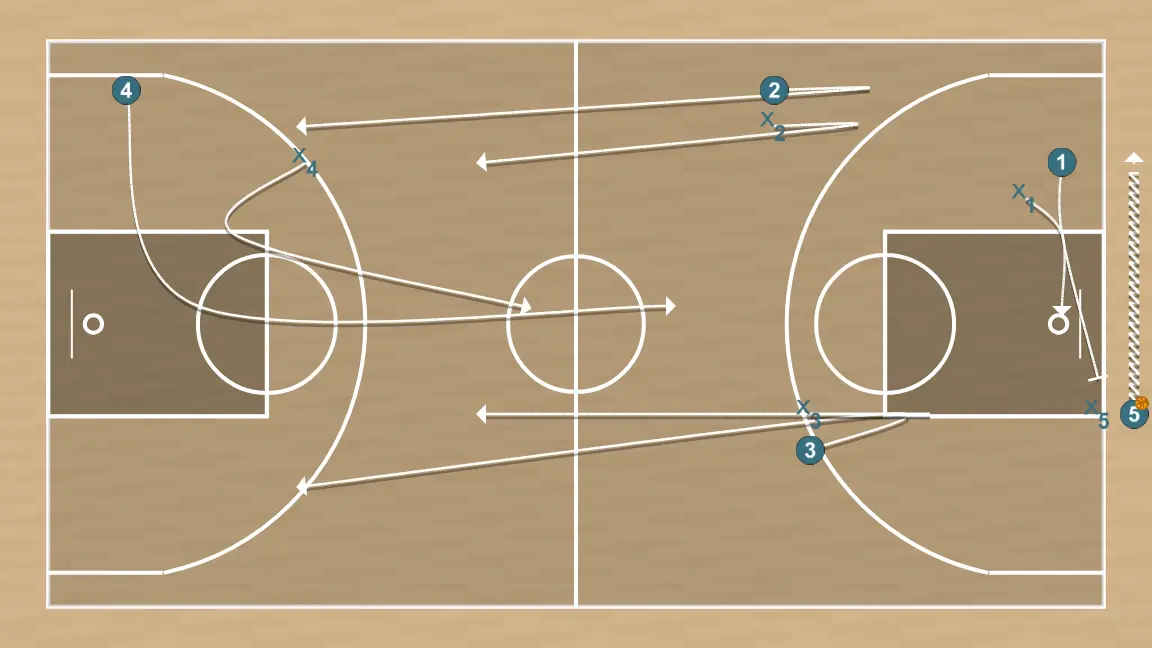
STEP 1
NAME: Last-Second Inbound.
Set-up: A post player inbounds the ball. The point guard or shooting guard fakes a reception on the right side. The perimeter players fake receiving in the first third of the backcourt. The power forward starts in the corner to create spacing and occupy the defender. Good timing and coordination from the entire team are essential.
Execution: The intended inbound receiver fakes coming to the ball but actually screens the inbounder's defender. The inbounder switches sides. At the same time, #4 fakes a cut toward the basket and changes direction to reach the center circle, while #2 and #3 fake coming to the ball and move toward the offensive three-point line.
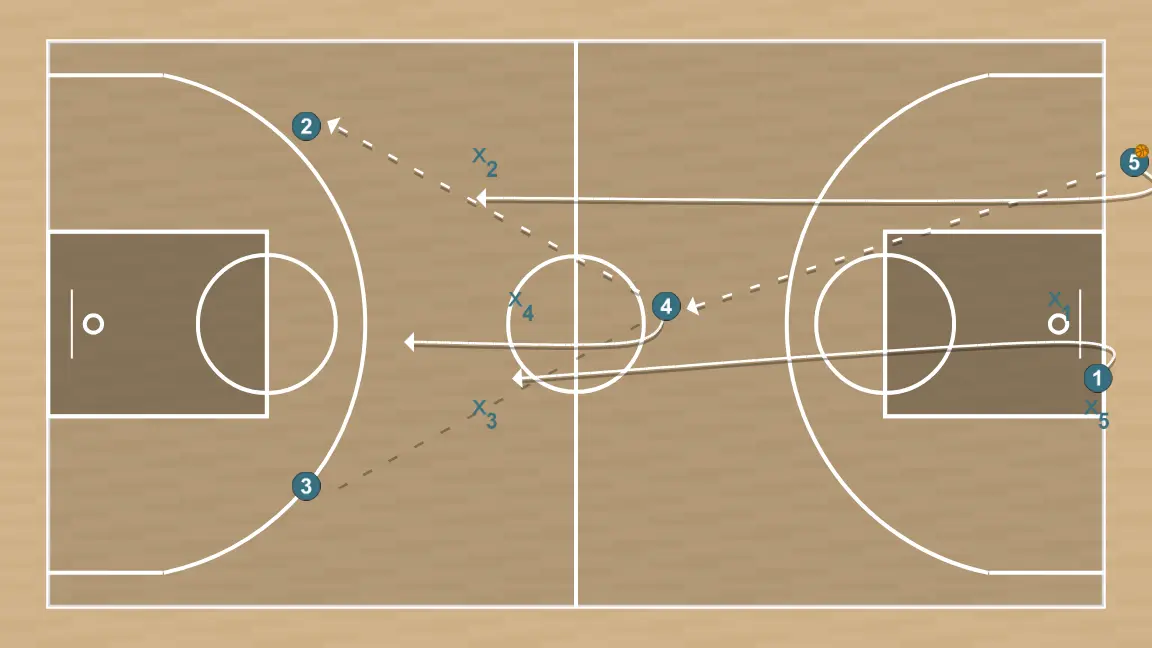
STEP 2
#4 must gain position against the defense around the center circle or beyond it to receive the ball. Immediately after receiving, #4 turns and, without dribbling, passes to #2 or #3.
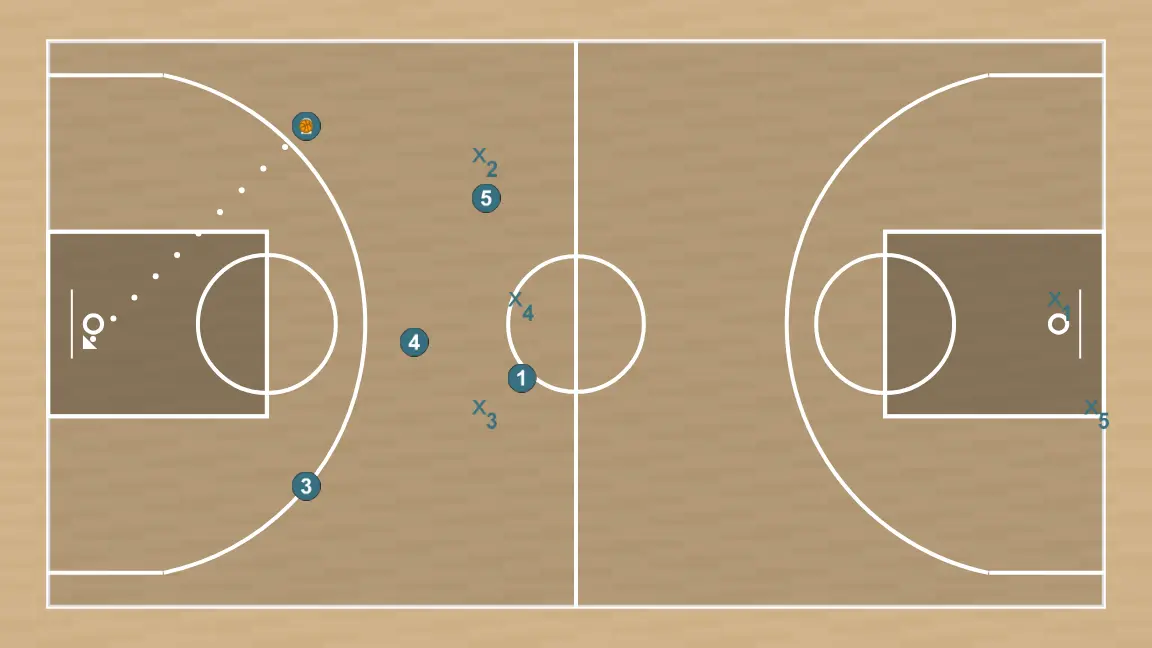
STEP 3
#2 or #3 receives for a three-point catch-and-shoot or a drive to the basket, depending on what is needed.
Comments
Sign in or register to continue. Your draft will remain in this browser and will not be published automatically.