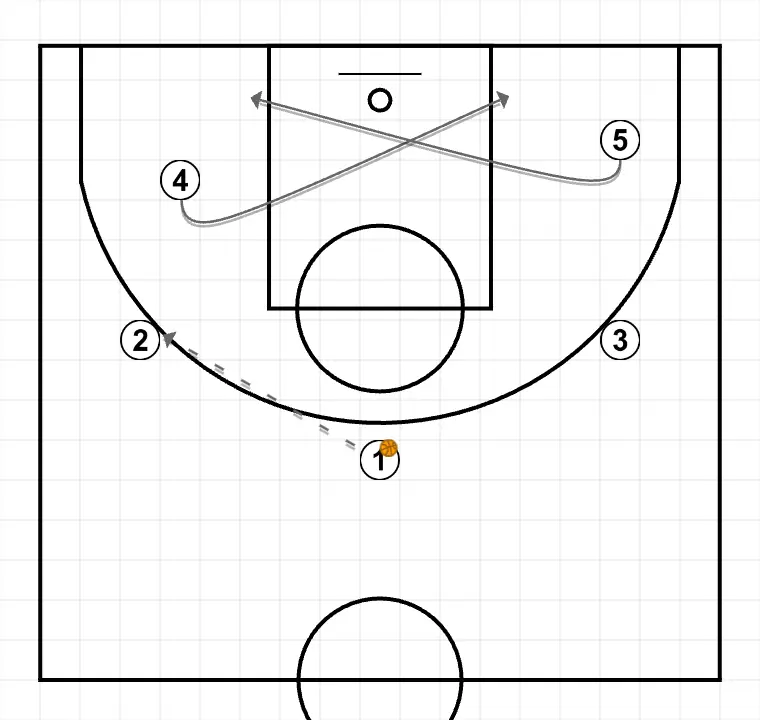
OVERLOAD

Take your team to the next level

  • Unlimited private diagrams
  • Cycle-based planning
  • Game plan
  • Live stats recording

✅ First month free! Cancel anytime Export your content anytime and use it on any other platform. No restrictions.

Start for free

OVERLOAD

Play
957 views ·
Play for zone defense

Generated from HEAD, created by cristofer Paredes

#Half-court basketball plays

FAQ: Basketball Plays for Half-Court Offense

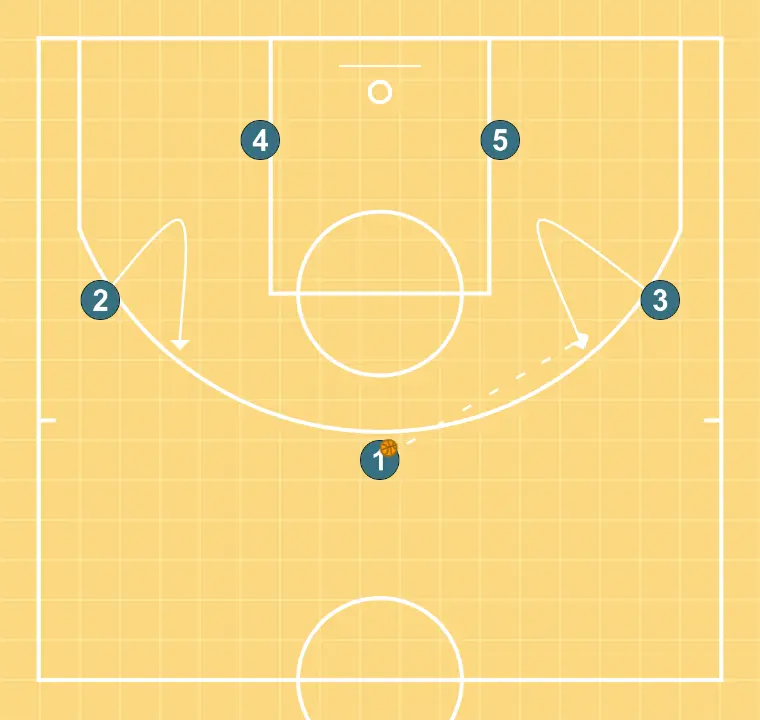
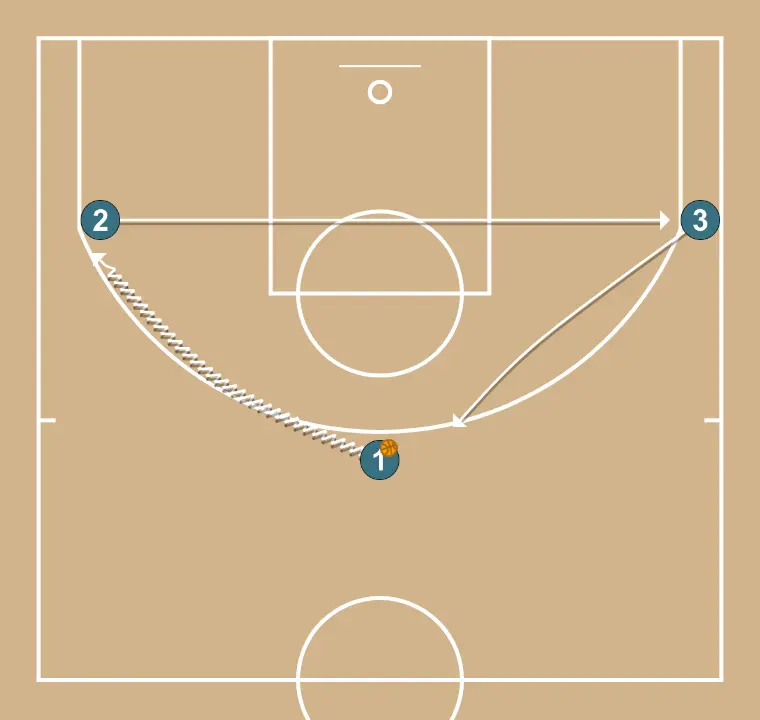
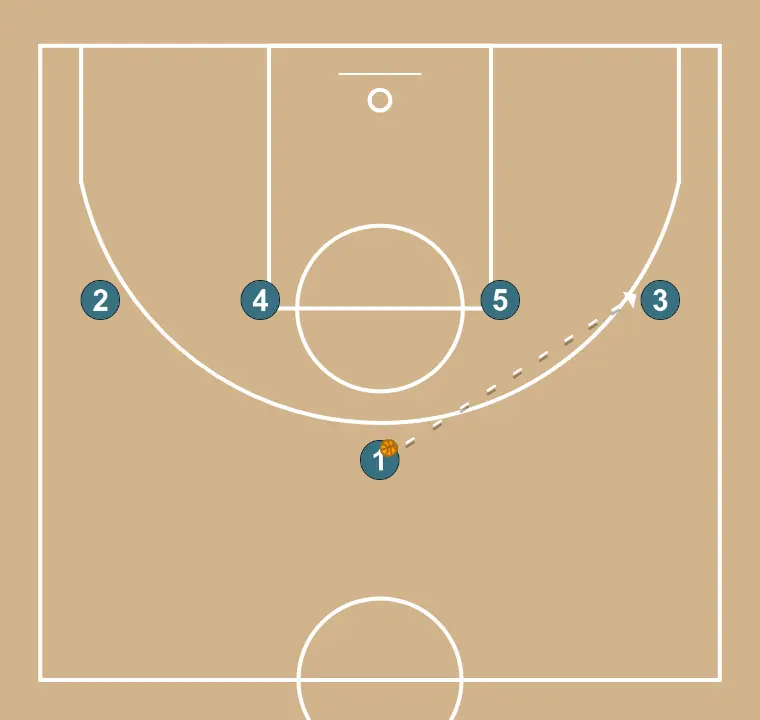
Basketball play overload, step 1: <div>the play starts with a v-cut by 2 and 3, 1 must pass to the player who comes out to 45° faster, in this case 3</div>
The play starts with a V-cut by 2 and 3, 1 must pass to the player who comes out to 45° faster, in this case 3
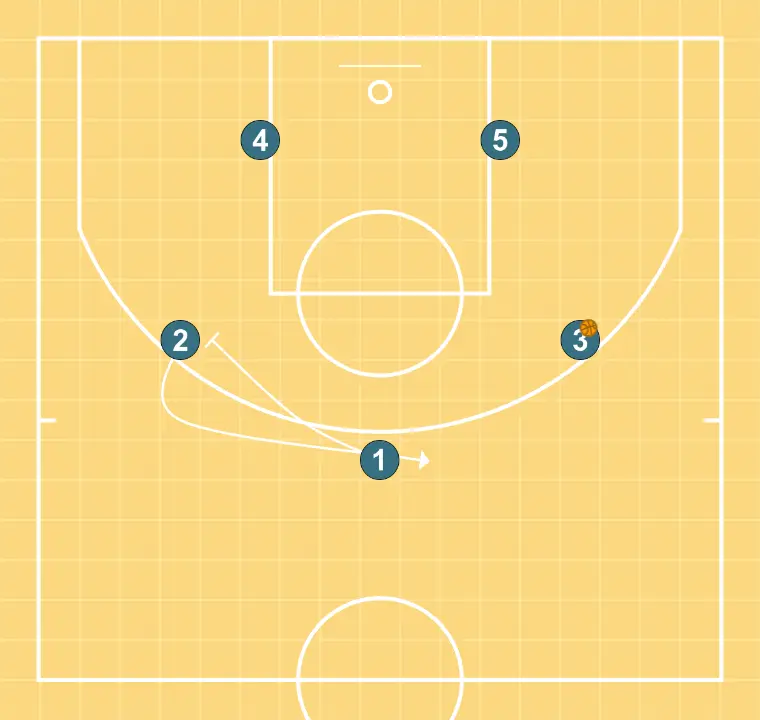
STEP 1

The play starts with a V-cut by 2 and 3, 1 must pass to the player who comes out to 45° faster, in this case 3

Basketball play overload, step 2: <div>after passing to 3, 1 must set a screen or off-ball screen for 2, so that 2 cuts to replace 1 by crossing the axis of the court</div>
After passing to 3, 1 must set a screen or off-ball screen for 2, so that 2 cuts to replace 1 by crossing the axis of the court
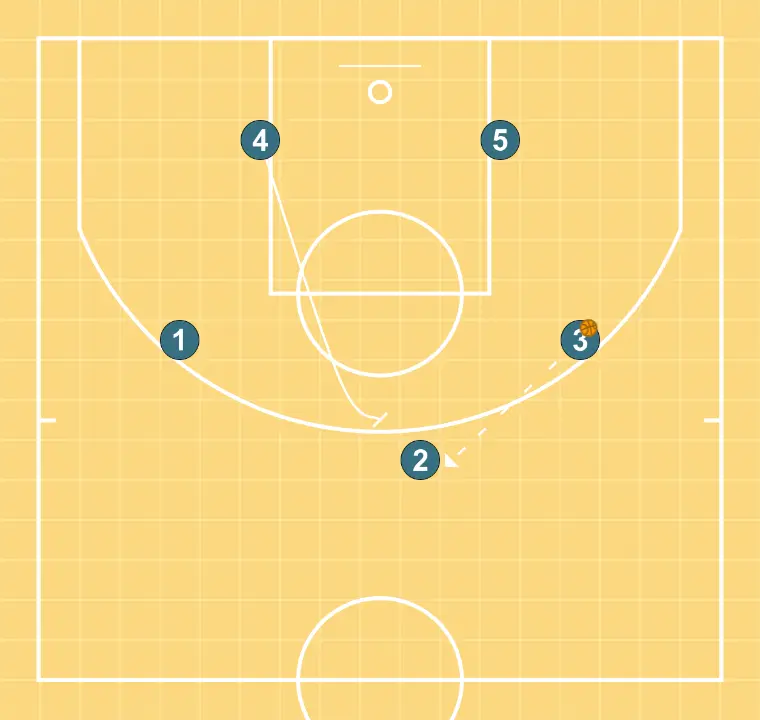
STEP 2

After passing to 3, 1 must set a screen or off-ball screen for 2, so that 2 cuts to replace 1 by crossing the axis of the court

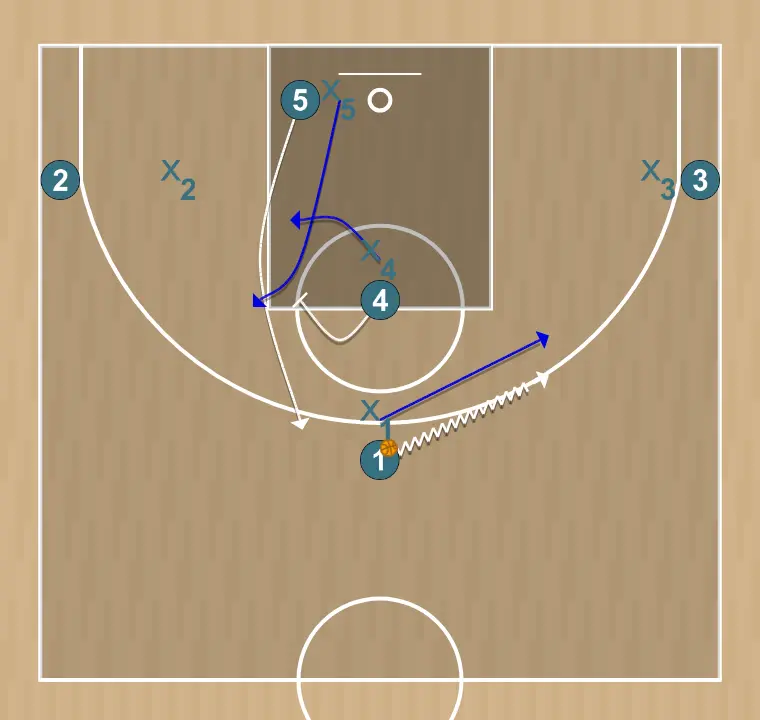
Basketball play overload, step 3: <div>3 passes to 2 to receive a screen from the post on the opposite side of the ball (player no
3 passes to 2 to receive a screen from the post on the opposite side of the ball (player no. 4)
STEP 3

3 passes to 2 to receive a screen from the post on the opposite side of the ball (player no. 4)
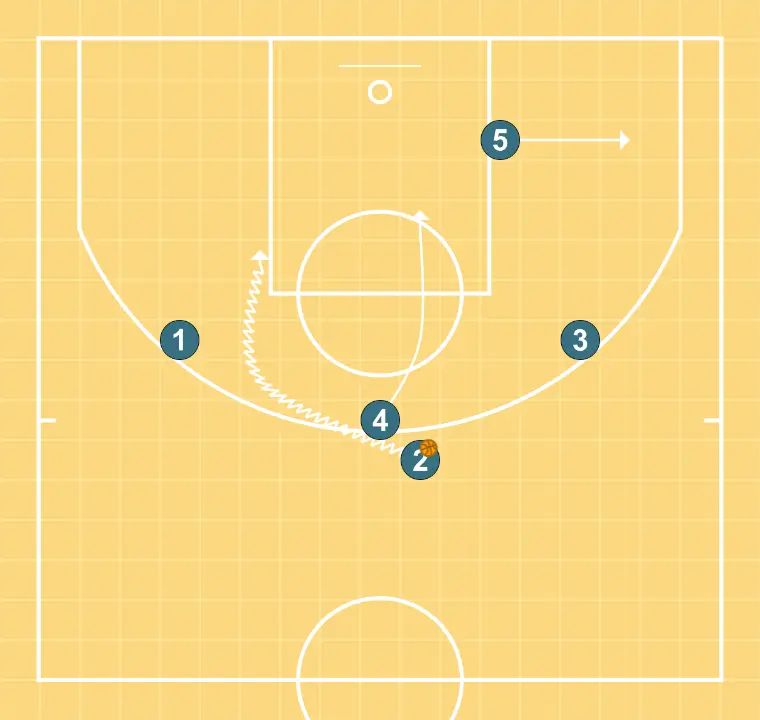
Basketball play overload, step 4: 4 changes location seeking advantage over the defender and scoring opportunities
4 changes location seeking advantage over the defender and scoring opportunities. 5 moves to support teammates and maintain constant game flow.
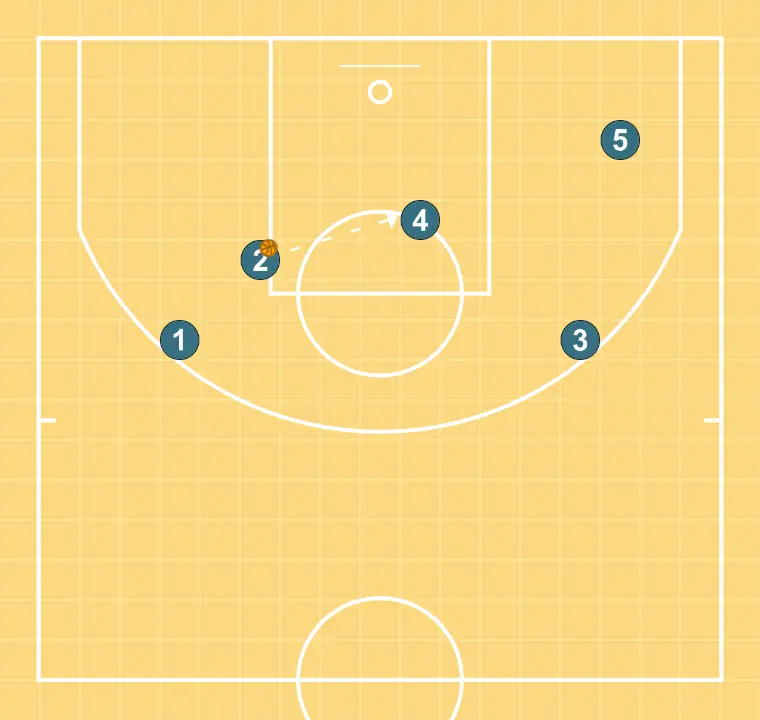
STEP 4

4 changes location seeking advantage over the defender and scoring opportunities. 5 moves to support teammates and maintain constant game flow.

Basketball play overload, step 5: <div>if 2 does not pass to 4, then 4 can pass to 1 to repeat the same action as at the start, identical to the beginning of the play but now with a screen from 5</div>
If 2 does not pass to 4, then 4 can pass to 1 to repeat the same action as at the start, identical to the beginning of the play but now with a screen from 5
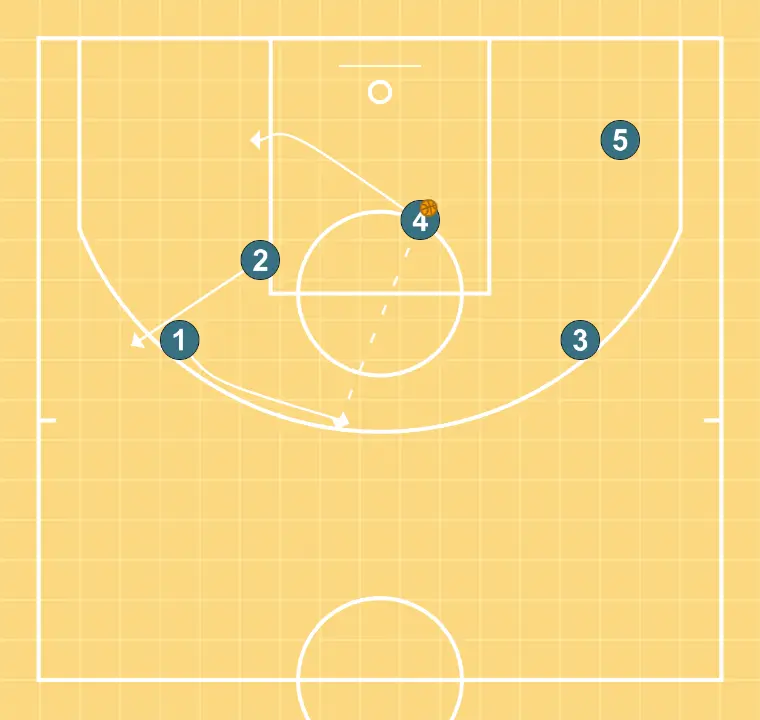
STEP 5

If 2 does not pass to 4, then 4 can pass to 1 to repeat the same action as at the start, identical to the beginning of the play but now with a screen from 5

Basketball play overload, step 6: <div>if it does not finish with 4, the ball is rotated outside to start the play again</div>
If it does not finish with 4, the ball is rotated outside to start the play again
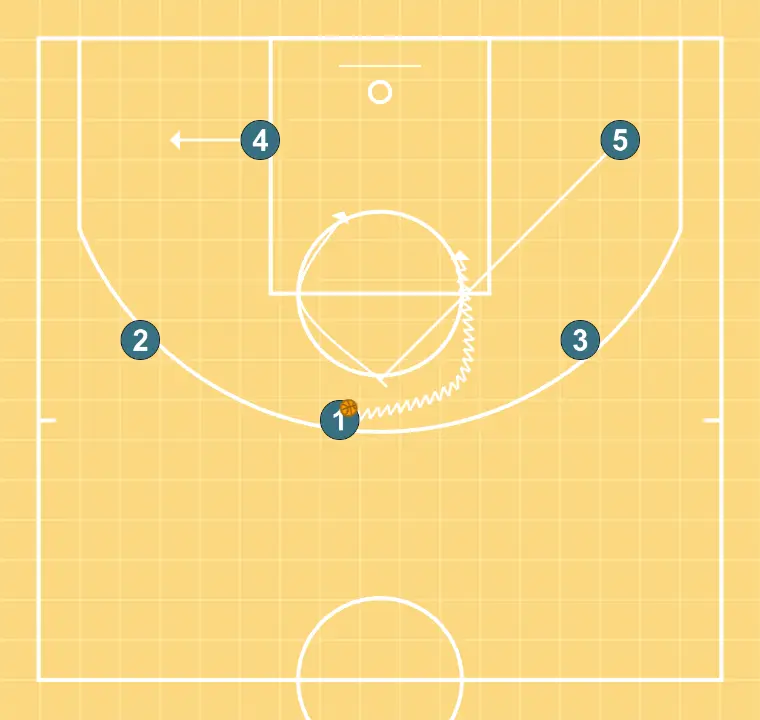
STEP 6

If it does not finish with 4, the ball is rotated outside to start the play again

Basketball play overload, step 7: <div>1 received the ball, and now 5 comes to set an off-ball screen</div>
1 received the ball, and now 5 comes to set an off-ball screen
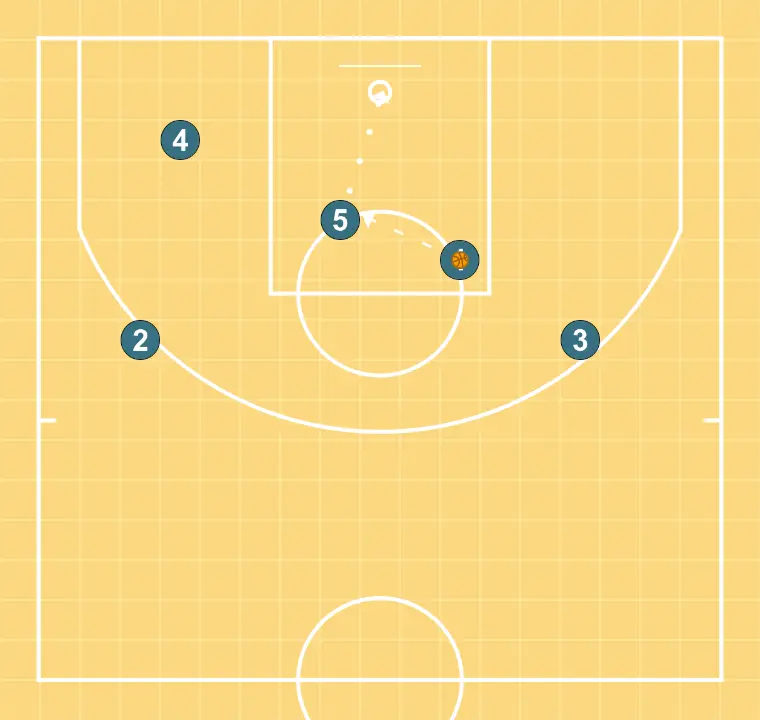
STEP 7

1 received the ball, and now 5 comes to set an off-ball screen

Basketball play overload, step 8: <div>1 passes to 5 to finish, or otherwise makes a pass to 3 so that 4 sets an off-ball screen and they can play a pick and roll</div>
1 passes to 5 to finish, or otherwise makes a pass to 3 so that 4 sets an off-ball screen and they can play a pick and roll
STEP 8

1 passes to 5 to finish, or otherwise makes a pass to 3 so that 4 sets an off-ball screen and they can play a pick and roll