
Drill
Layup starting from the four quarters of the court
Extracted from the book Basketball Fundamentals, by Ryan Goodson
Development
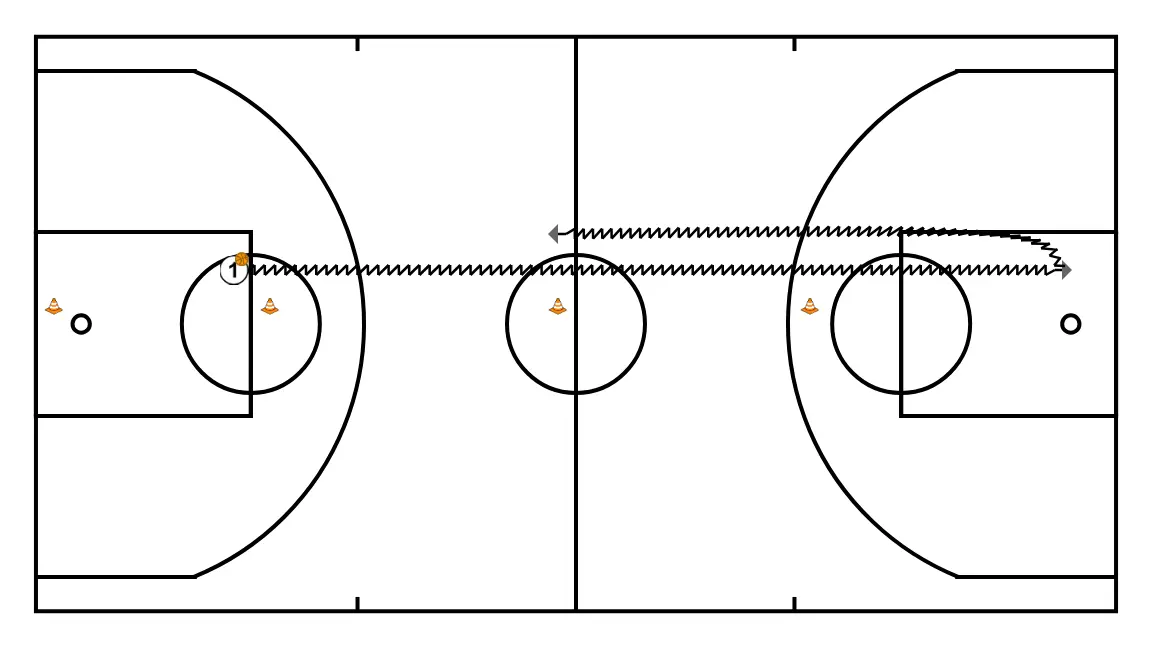
1. The player must run the court as quickly as possible.
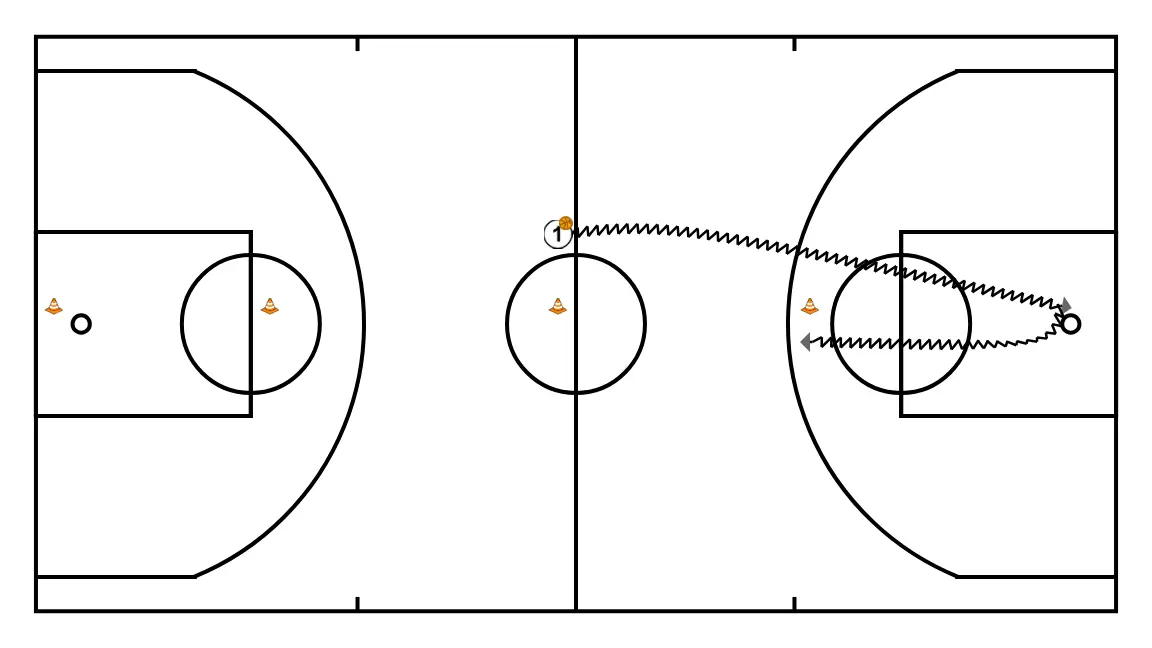
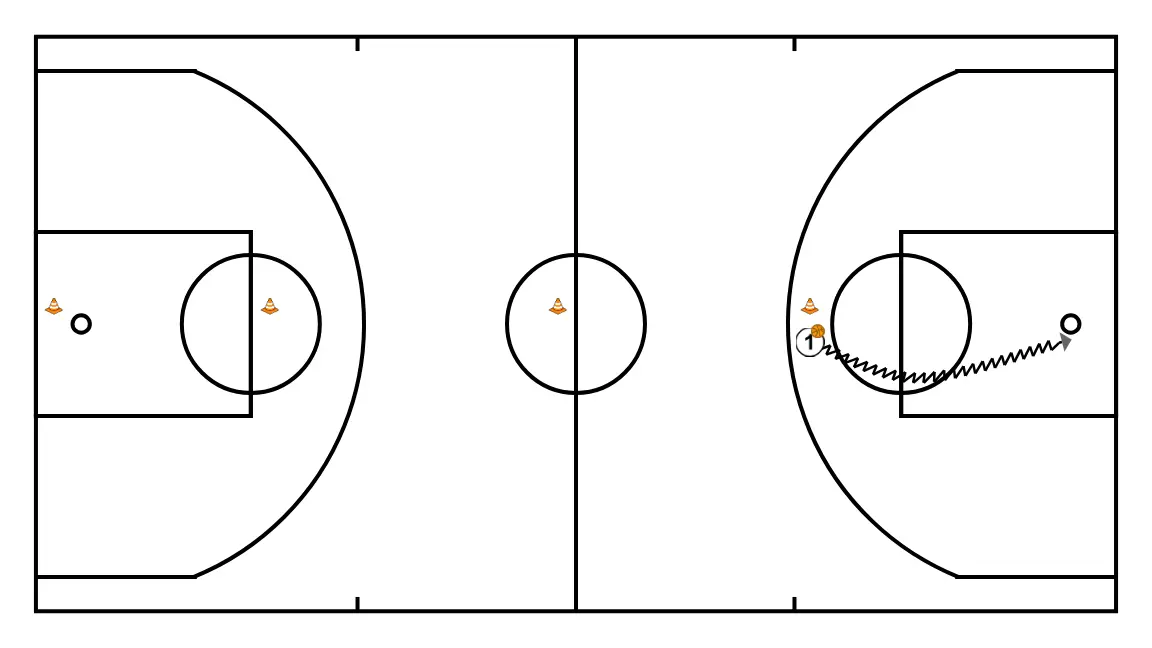
2. The player completes the route with a layup advancing from the perimeter line after dribbling the ball once, followed by another layup advancing from half court with two dribbles and then another layup advancing from three quarters of the court with three dribbles, and, finally, a layup coming from the baseline of the opposing court and after giving four bounces.
3. The player is timed from the beginning of the exercise until the conclusion of the last layup. The elapsed time is noted.
4. The player executes the exercise with one hand and then with the other.
Keys to training
To add difficulty, the player will try to execute the exercise with two balls and giving the correct number of bounces from each of the four points on the court handling both balls. When reaching the basket, the player must finish the layup in the outside hand and holding the other ball with the inside hand.
Tactical viewer
Use the existing playback controls to study the movement, then review each step below.
Save and share
Practice fit
This drill remains fully available using its existing categories and description.
Belongs to set:
Dribbling Exercises - Basketball Fundamentals (Ryan Goodson)
Step by step
Step descriptions
Review the court position and available coaching instructions for each step.
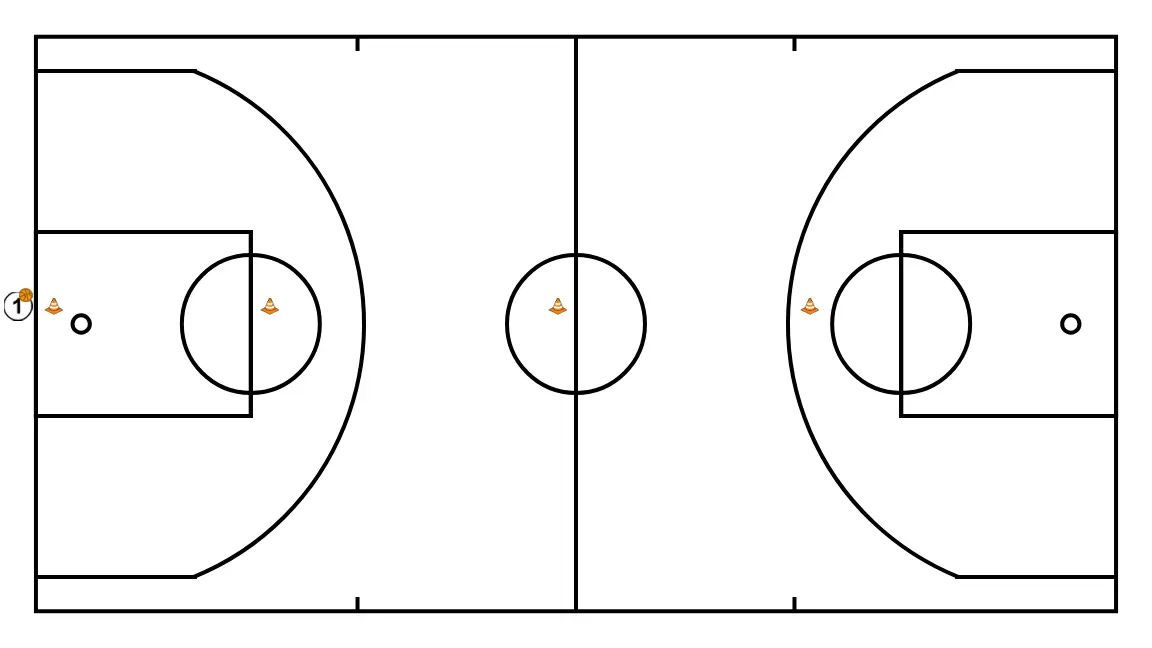
STEP 1
Players are positioned at key points on the court, seeking offensive and defensive balance.

STEP 2
STEP 3
STEP 4
Comments
Sign in or register to continue. Your draft will remain in this browser and will not be published automatically.