
Drill
11 Real. Advantages 3v2
This 11 is a revised version. It starts from the base of the one we all know, but I always prefer to begin from a real situation, and the traditional one wasn’t realistic for me.
- In a real game we don’t have 2 defenders waiting in the defensive half-court
- Waiting players tend to relax
I consider this proposal more realistic and with better flow due to fewer waiting times.
For me it is a basic drill to work on offensive advantages and, logically, defensive disadvantages.
#advantages #3v2 #closeout.
Every drill works offense and defense. You can add offensive rules such as limiting dribbles, and also rules for the defense.
Video
This 11 is a revised version. It starts from the base of the one we all know, but I always prefer to begin from a real situation, and the traditional one wasn’t realistic for me. In a real game we don’t have 2 defenders waiting in the defensive half-courtWaiting players tend to relax I consider this proposal more realistic and with better flow due to fewer waiting times. For me it is a basic drill to work on offensive advantages and, logically, defensive disadvantages. #advantages #3v2 #closeout. Every drill works offense and defense. You can add offensive rules such as limiting dribbles, and also rules for the defense.
Step descriptions
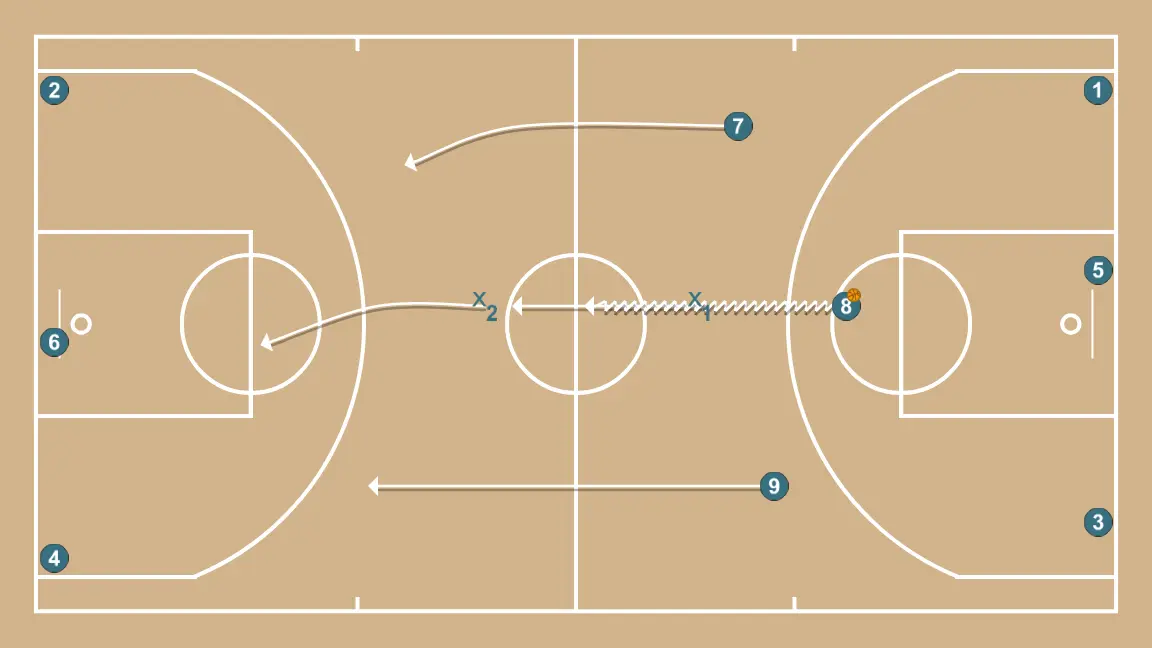
STEP 1
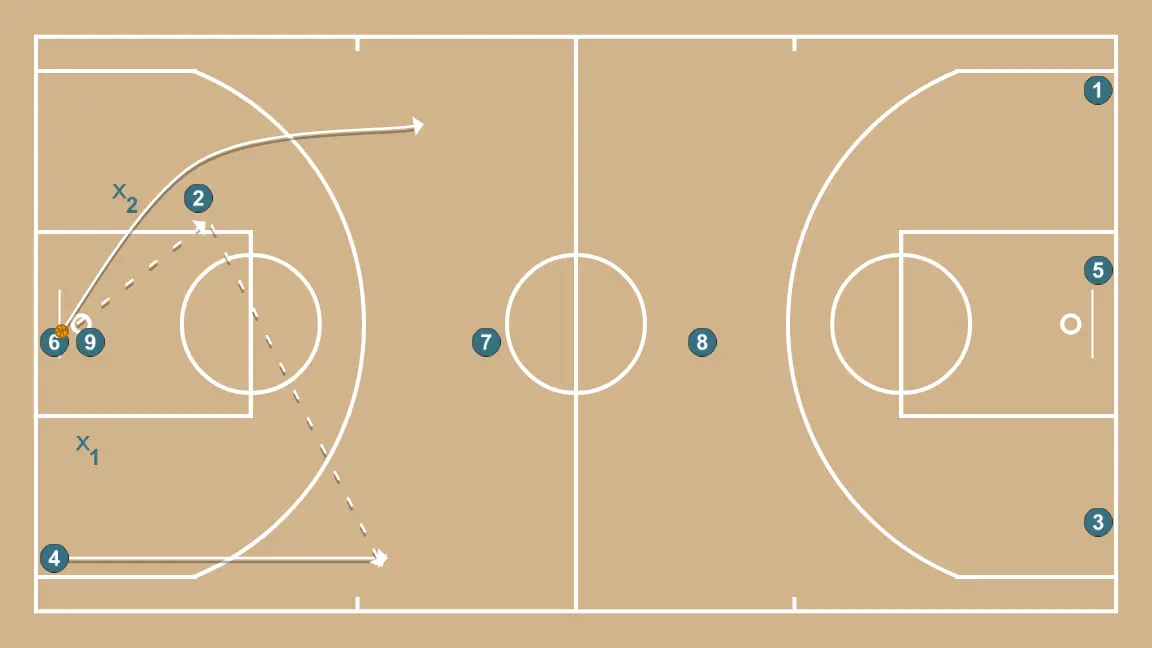
3 attackers start from midcourt, two defenders in half court, and 3 players on each baseline (they may have their own ball to attack after a score, or use the same ball to work on quick inbound).
Players are arranged as shown: 3 players on each baseline with 1 ball, 3 attackers with a ball on the central line to attack, and 2 defenders in half court.
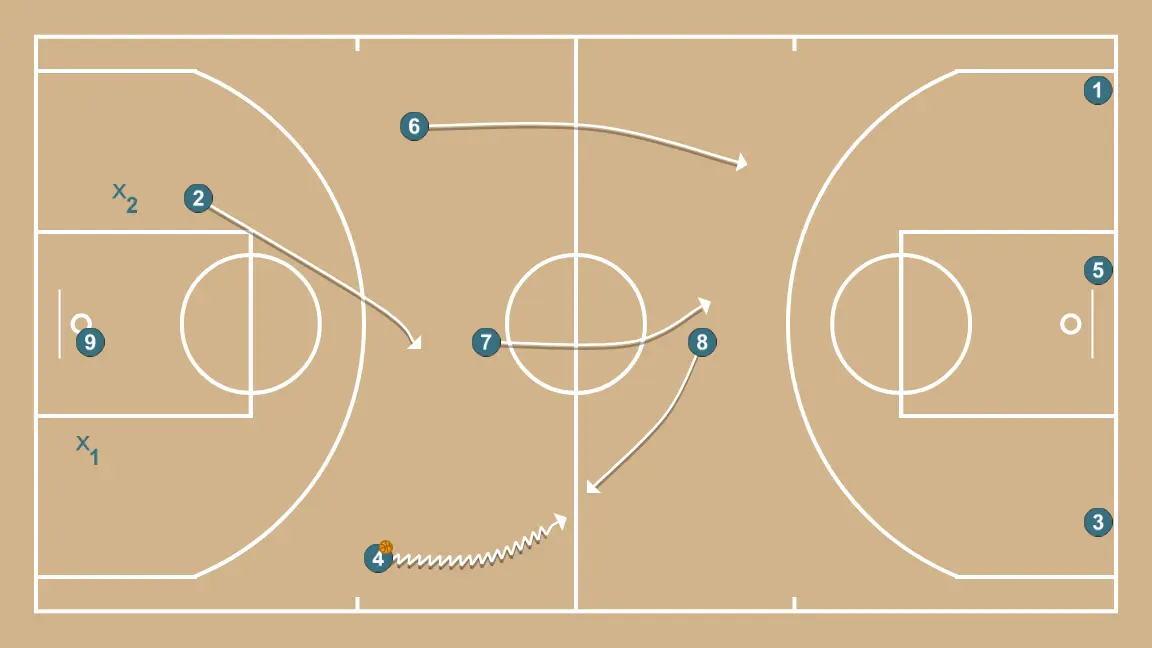
The numerical advantage 3v2 is played, and at the moment of the shot the 3 baseline players start running the court if they have the ball; if not, they must rebound. The two players who did not shoot (in this case 1 and 3) perform defensive balance. The shooter and the two defenders rotate/rest on the baseline with the ball.
The drill can be played with 1 or 3 balls (to vary the pace).
In case of:
- 9 players: place 2 players on each baseline.
- the player who joins the new attacking team is the last attacker who touched the ball.
- 10 players: place 2 players on one baseline and rotate following the 9-player version. On the other baseline, place the 3 from the original 11-player drill.
- More than 12 players: the extra players join any of the waiting lines on the baselines.
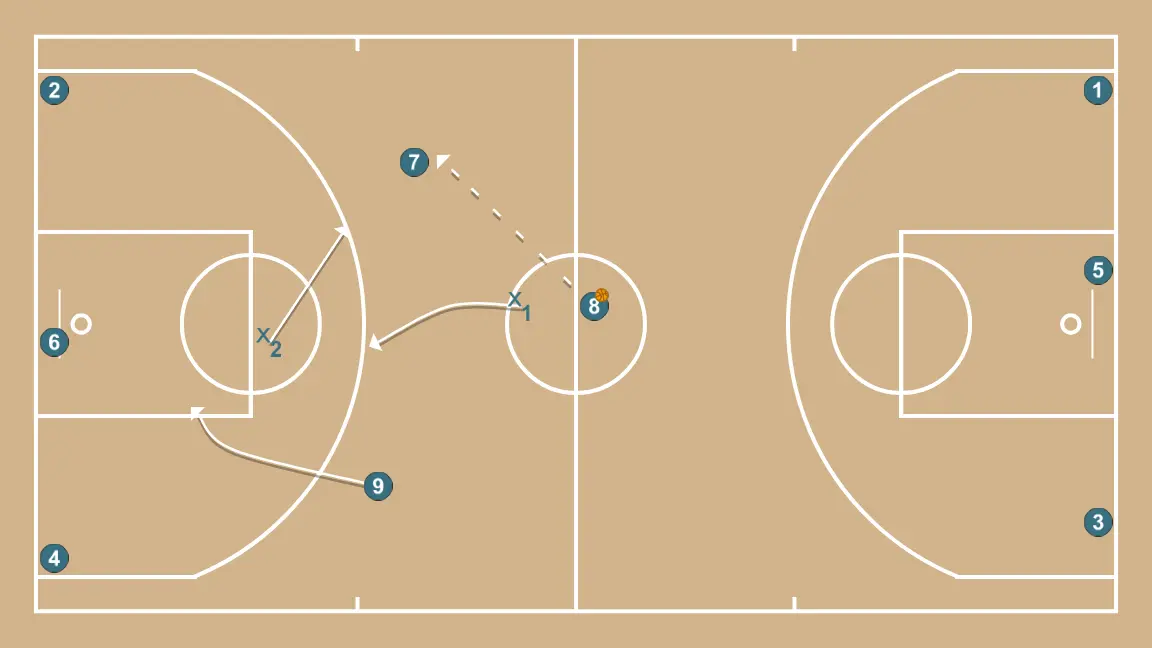
STEP 2
Shooting guard moves strategically to provide new passing lanes and open space. Point guard places themselves strategically to generate passing angles and anticipate defensive moves.
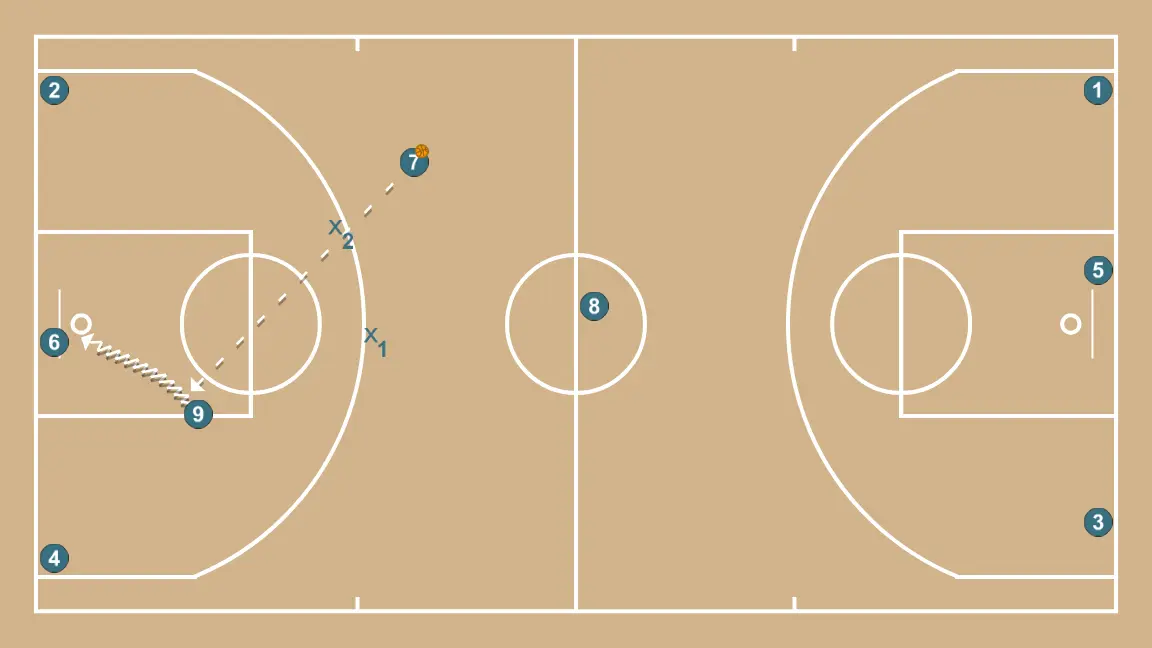
STEP 3
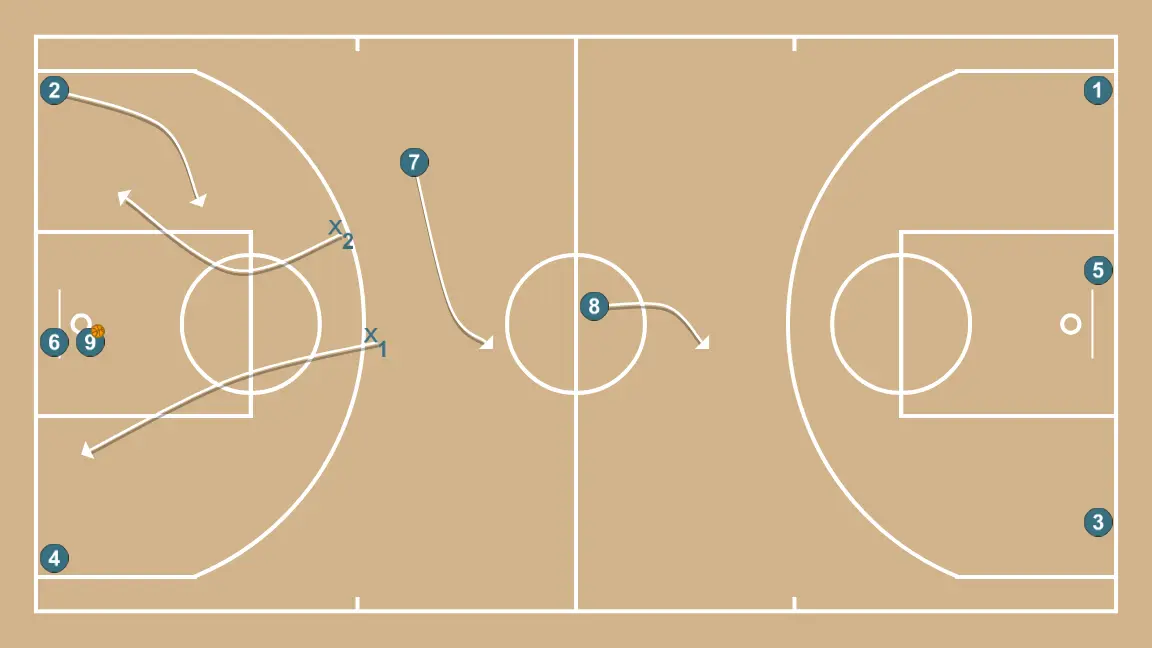
STEP 4
2 alters position to create defensive mismatches and penetration options. Point guard alters position to create defensive mismatches and penetration options. 2 shifts to an optimal spot on the court to maximize offensive efficiency.
STEP 5
Power forward shifts to an optimal spot on the court to maximize offensive efficiency.
STEP 6
3 attackers start from midcourt, two defenders are in one half-court, and 3 players are placed on each baseline with 1 ball on each baseline.
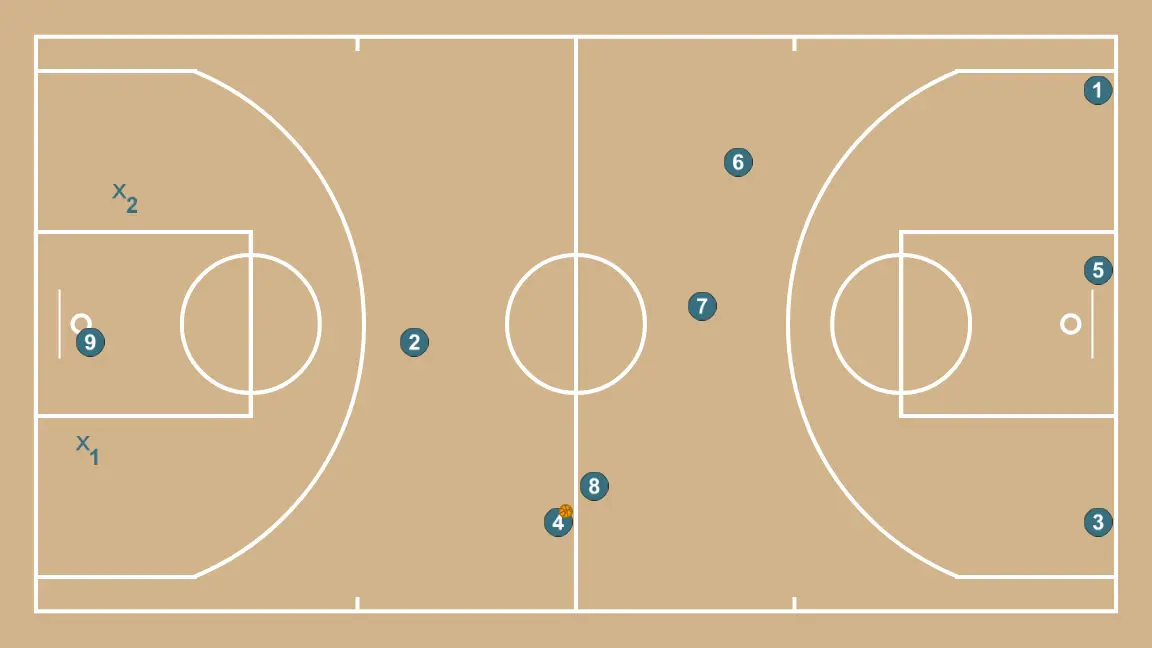
The players are arranged as shown in the diagram: 3 players on each baseline with 1 ball, 3 attackers with a ball on the central line to attack, and 2 defenders in one half-court.
The numerical advantage 3v2 is played, and at the moment of the shot, the 3 baseline players sprint down the court. The two players who did not shoot (in this case 1 and 3) perform defensive balance. The shooter and the two defenders rotate/rest on the baseline with the ball.
The drill can be played with 1 or 3 balls (to vary the pace of the drill).
In case of:
- 9 players: place 2 players on each baseline.
- the player who will join the new attacking team will be the last attacker who touched the ball.
- 10 players: place 2 players on one baseline and rotate like the 9-player version. On the other baseline, place the 3 players from the original 11-player setup.
- More than 12 players: the extra players join any of the lines formed by the players waiting on each baseline.
STEP 7
Initial positions are set so the team can move in a coordinated way and create space.