
Drill
11 Real. Advantages 3v2
Tactical viewer
2D
Create a variation
Start from this diagram and adapt your own copy. The original stays unchanged.
Create a diagram free
Start a new diagram without signing up.
Join free and save your ideas. PRO is optional.
The coach’s idea
This 11 is a revised version. It starts from the base of the one we all know, but I always prefer to begin from a real situation, and the traditional one wasn’t realistic for me.
- In a real game we don’t have 2 defenders waiting in the defensive half-court
- Waiting players tend to relax
I consider this proposal more realistic and with better flow due to fewer waiting times.
For me it is a basic drill to work on offensive advantages and, logically, defensive disadvantages.
#advantages #3v2 #closeout.
Every drill works offense and defense. You can add offensive rules such as limiting dribbles, and also rules for the defense.
Step descriptions
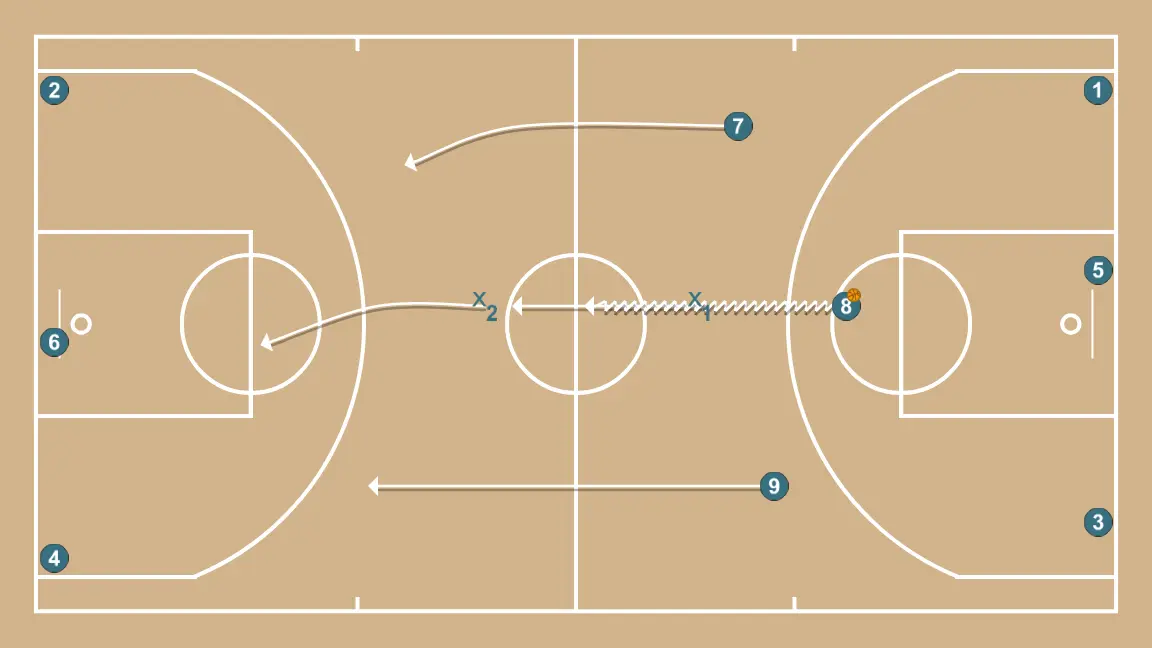
STEP 1
3 attackers start from midcourt, two defenders in half court, and 3 players on each baseline (they may have their own ball to attack after a score, or use the same ball to work on quick inbound).
Players are arranged as shown: 3 players on each baseline with 1 ball, 3 attackers with a ball on the central line to attack, and 2 defenders in half court.
The numerical advantage 3v2 is played, and at the moment of the shot the 3 baseline players start running the court if they have the ball; if not, they must rebound. The two players who did not shoot (in this case 1 and 3) perform defensive balance. The shooter and the two defenders rotate/rest on the baseline with the ball.
The drill can be played with 1 or 3 balls (to vary the pace).
In case of:
- 9 players: place 2 players on each baseline.
- the player who joins the new attacking team is the last attacker who touched the ball.
- 10 players: place 2 players on one baseline and rotate following the 9-player version. On the other baseline, place the 3 from the original 11-player drill.
- More than 12 players: the extra players join any of the waiting lines on the baselines.
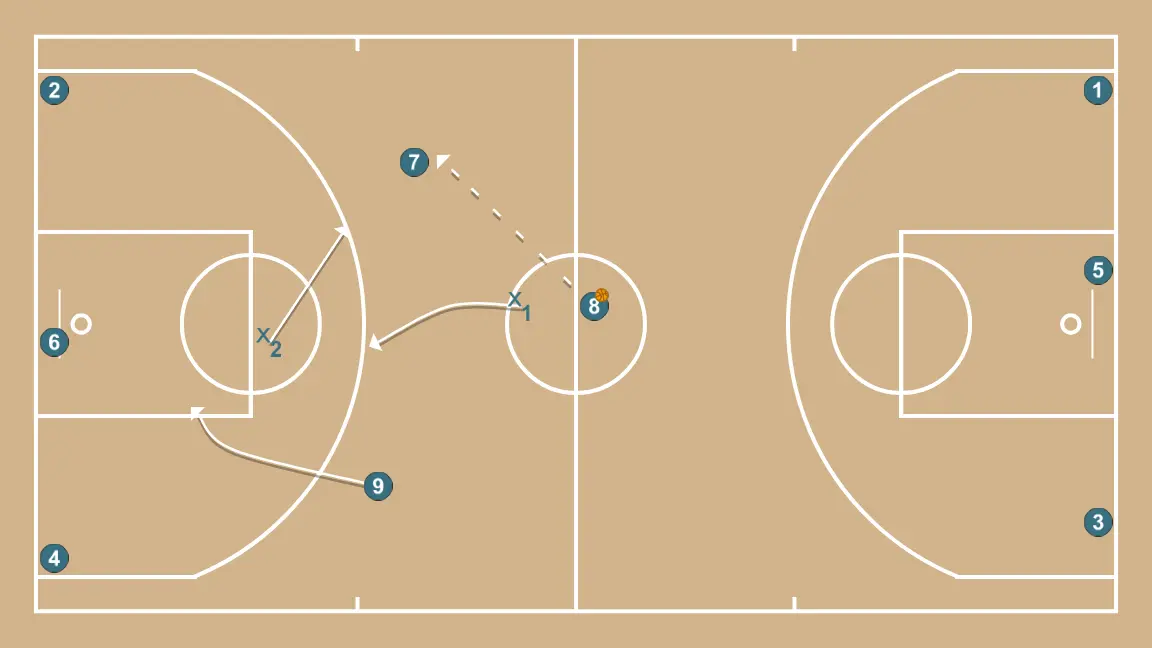
STEP 2
Shooting guard moves strategically to provide new passing lanes and open space. Point guard places themselves strategically to generate passing angles and anticipate defensive moves.
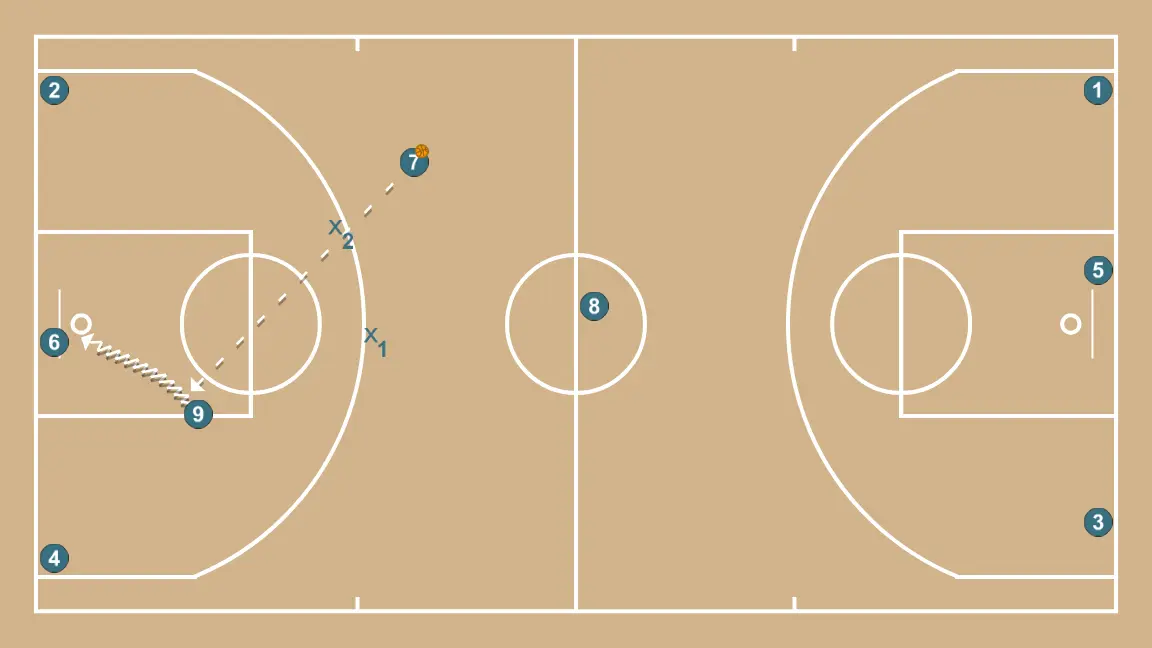
STEP 3
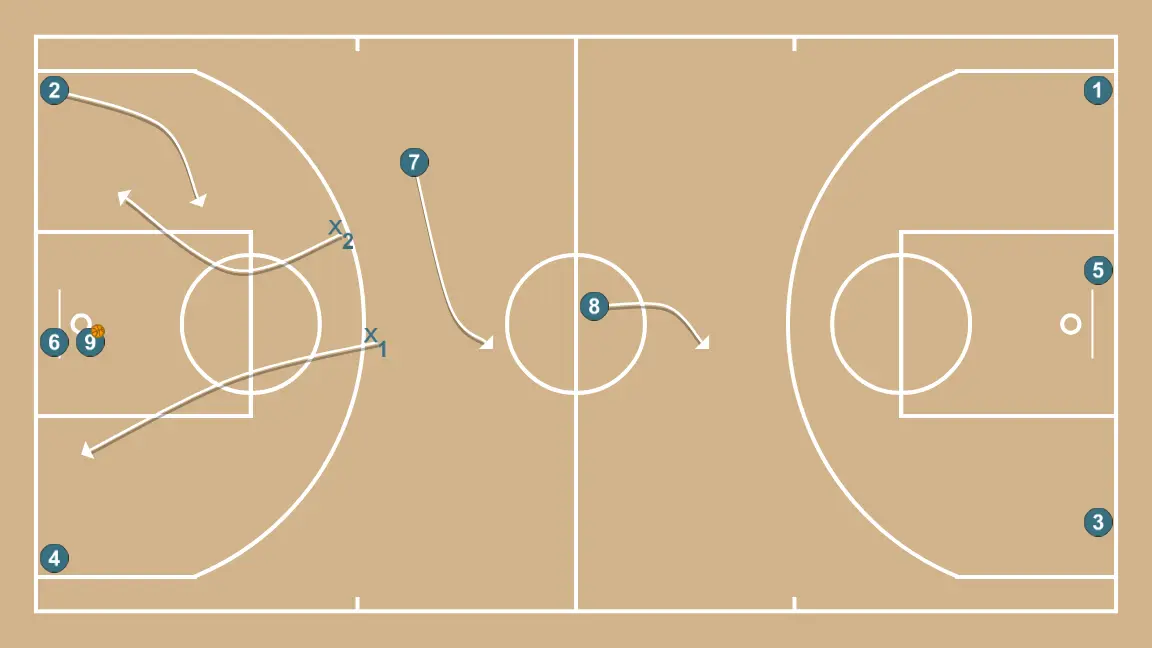
STEP 4
2 alters position to create defensive mismatches and penetration options. Point guard alters position to create defensive mismatches and penetration options. 2 shifts to an optimal spot on the court to maximize offensive efficiency.
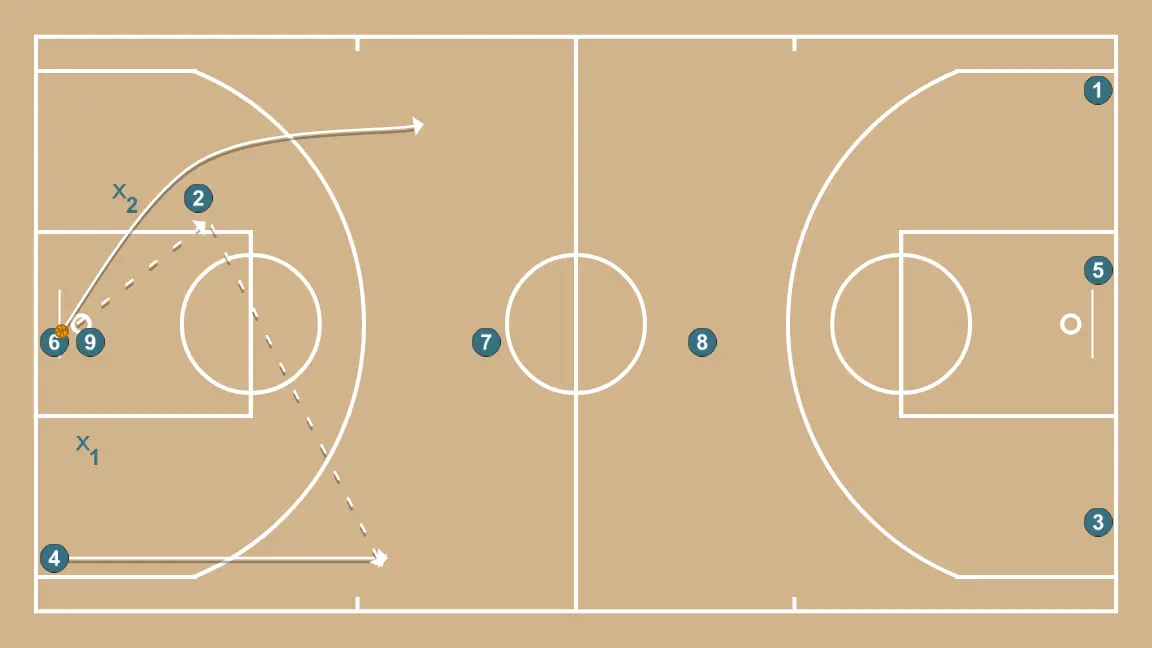
STEP 5
Power forward shifts to an optimal spot on the court to maximize offensive efficiency.
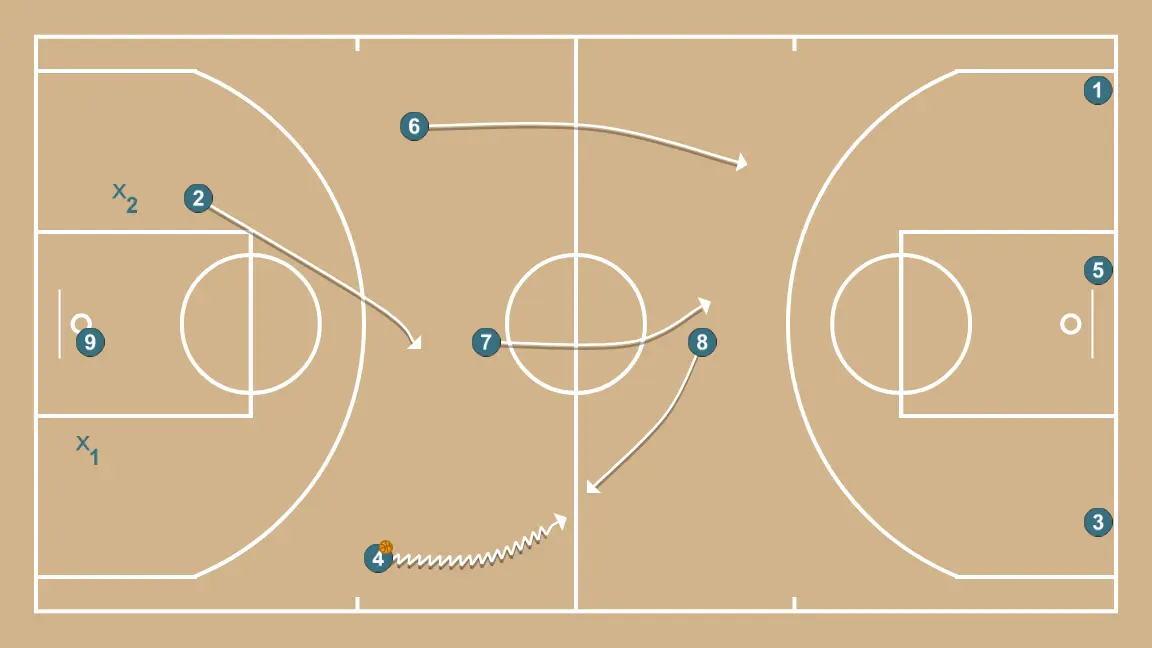
STEP 6
3 attackers start from midcourt, two defenders are in one half-court, and 3 players are placed on each baseline with 1 ball on each baseline.
The players are arranged as shown in the diagram: 3 players on each baseline with 1 ball, 3 attackers with a ball on the central line to attack, and 2 defenders in one half-court.
The numerical advantage 3v2 is played, and at the moment of the shot, the 3 baseline players sprint down the court. The two players who did not shoot (in this case 1 and 3) perform defensive balance. The shooter and the two defenders rotate/rest on the baseline with the ball.
The drill can be played with 1 or 3 balls (to vary the pace of the drill).
In case of:
- 9 players: place 2 players on each baseline.
- the player who will join the new attacking team will be the last attacker who touched the ball.
- 10 players: place 2 players on one baseline and rotate like the 9-player version. On the other baseline, place the 3 players from the original 11-player setup.
- More than 12 players: the extra players join any of the lines formed by the players waiting on each baseline.
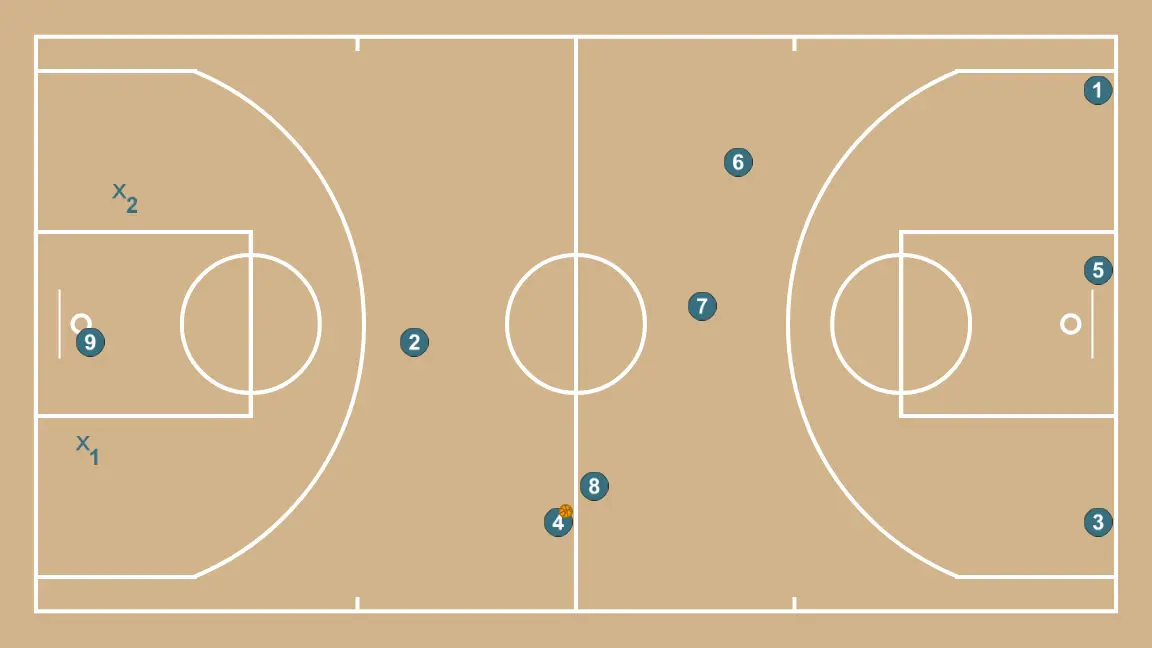
STEP 7
Initial positions are set so the team can move in a coordinated way and create space.
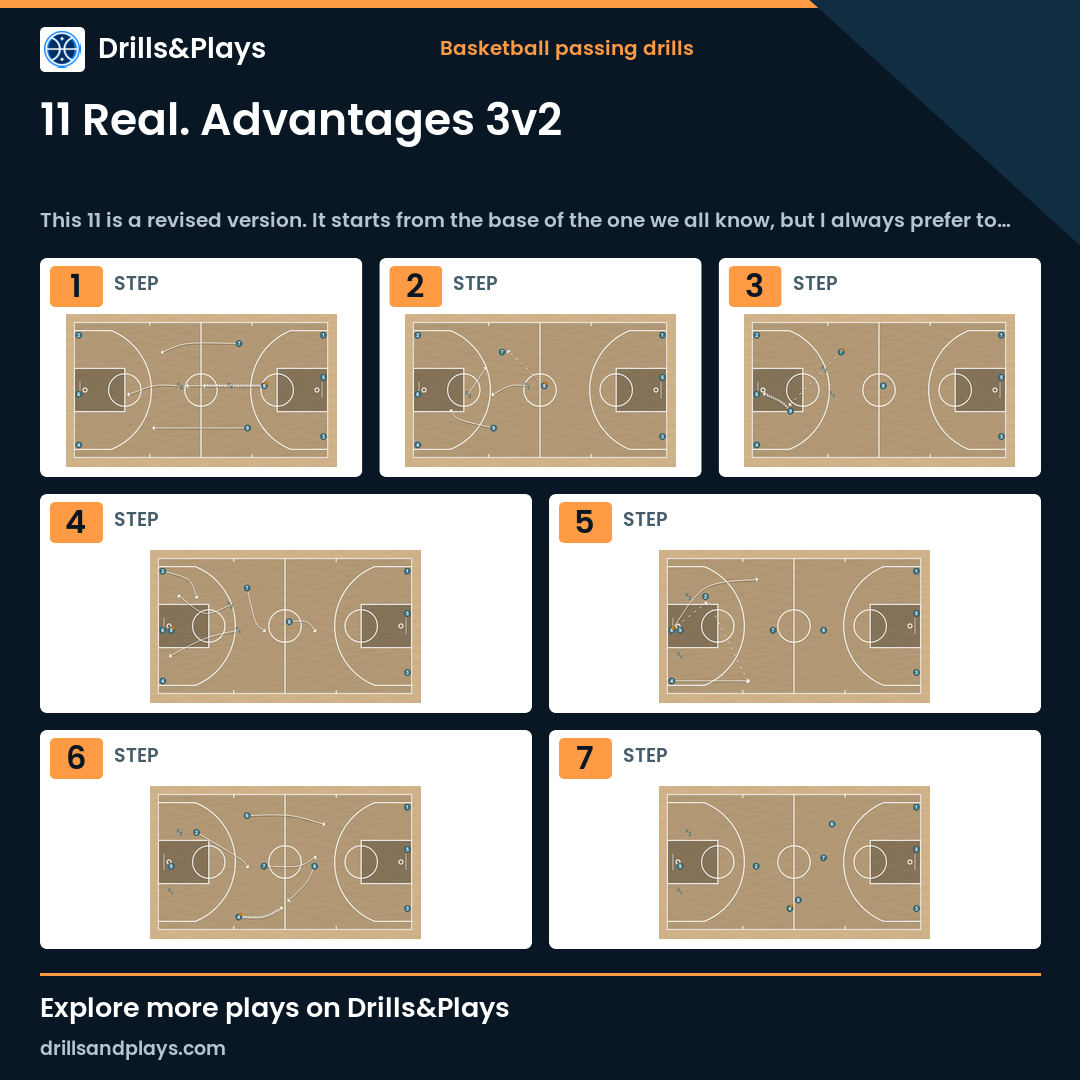
The complete drill, step by step
Comments
Sign in or register to continue. Your draft will remain in this browser and will not be published automatically.