After Timeout Plays - Example 2
Take your team to the next level
- Unlimited private diagrams
- Cycle-based planning
- Game plan
- Live stats recording
✅ First month free! Cancel anytime Export your content anytime and use it on any other platform. No restrictions.
After Timeout Plays - Example 2
Play
996 views ·
This is an example of an after timeout play that features basketball screens to create perimeter scoring opportunities for the team’s best shooters.
Belongs to set:
After Timeout Plays examples



STEP 1
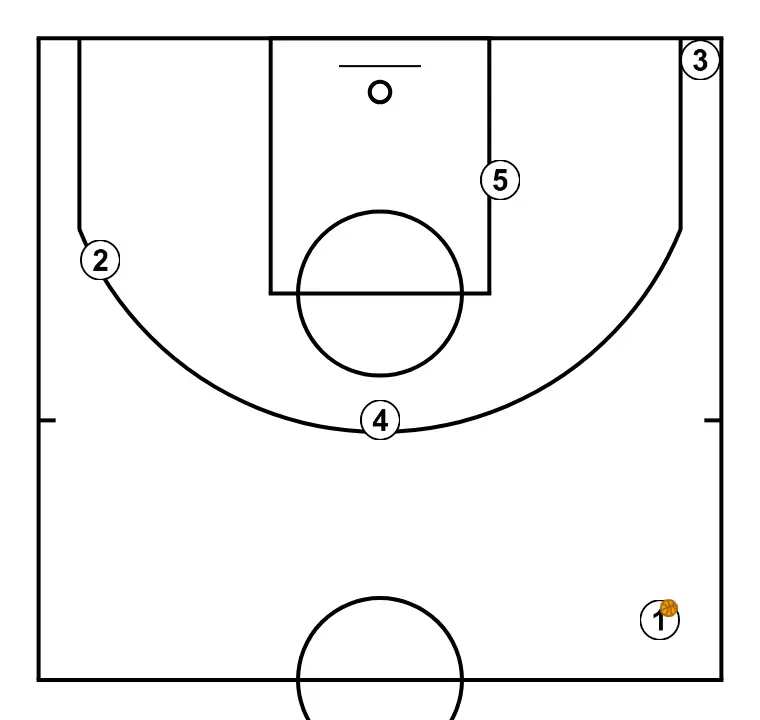
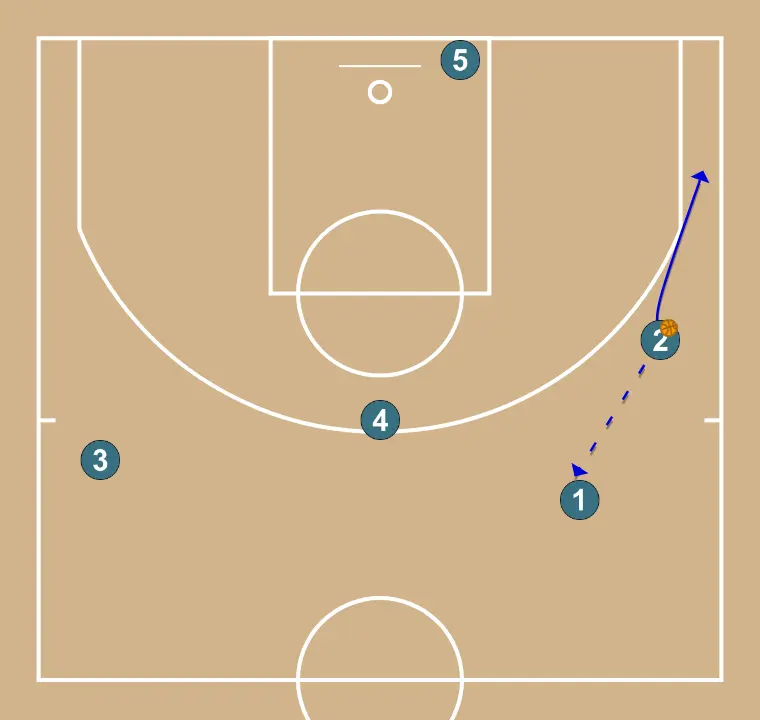
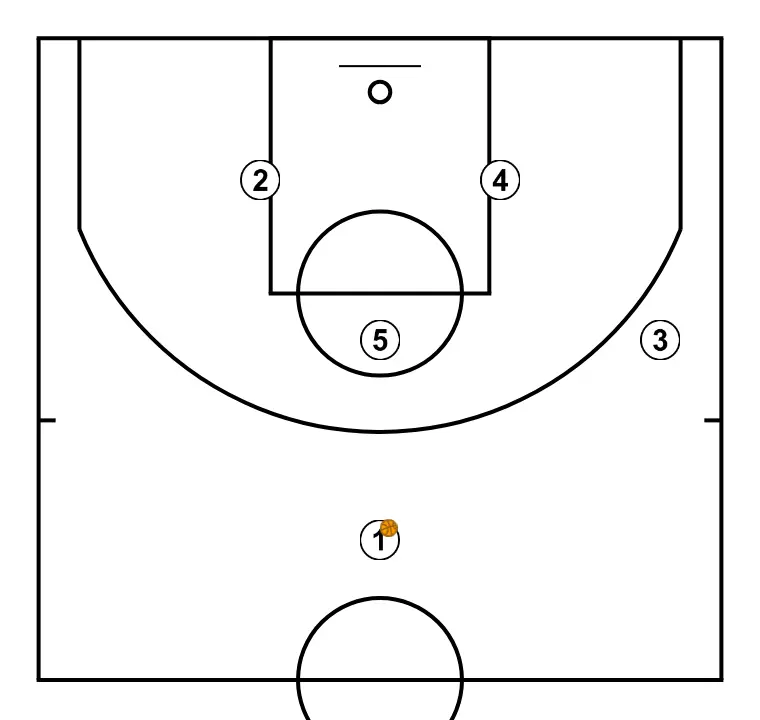
We define the starting positions of the players, placing each strategically to optimize passes and attacking options.
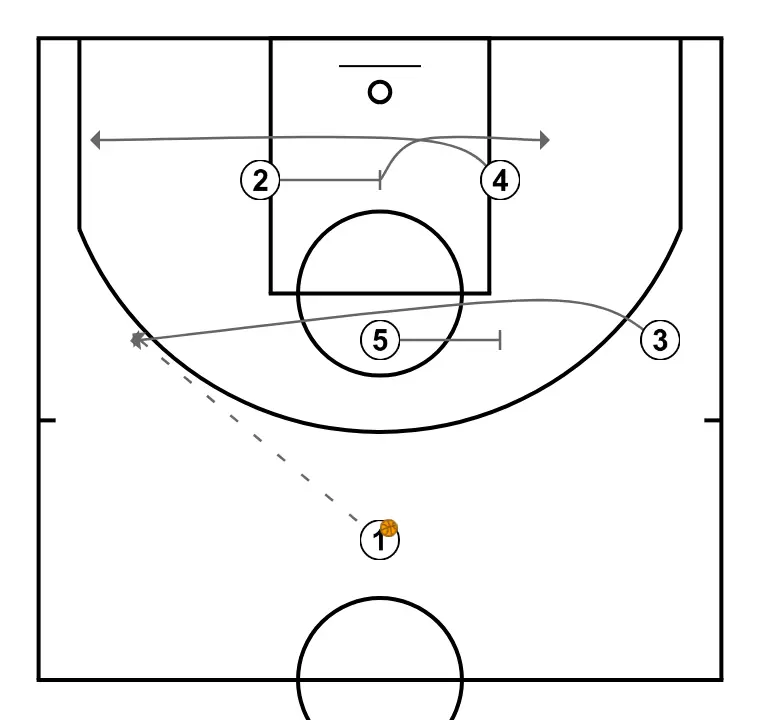
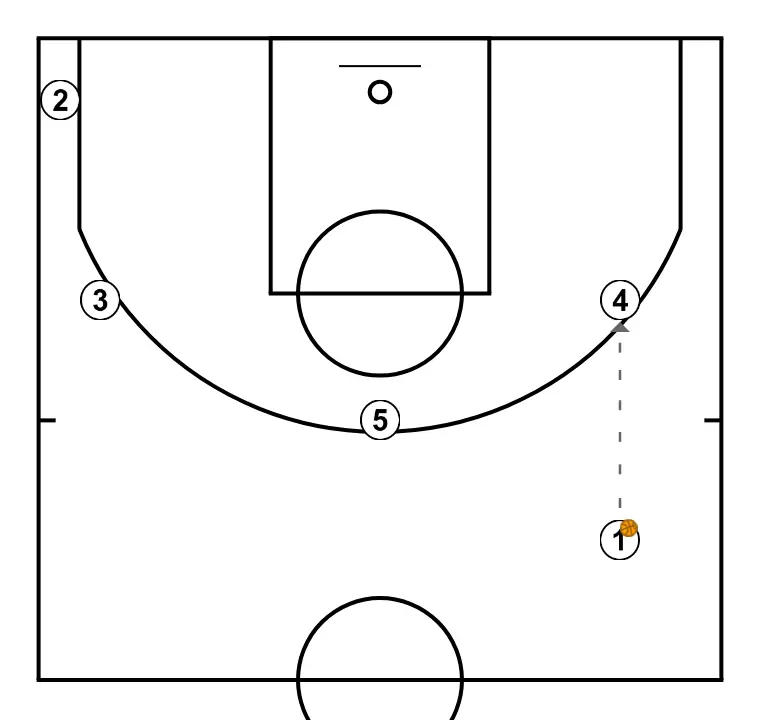
To begin, 3 cuts to the left wing via a high post cross screen set by 5.
At the same time, 4 cuts to the left corner via a cross screen set by 2 in the lane. Next, 3 receives the ball from 1 and then 4 could receive the ball from 3 and take a jump shot if open.
At the same time, 4 cuts to the left corner via a cross screen set by 2 in the lane. Next, 3 receives the ball from 1 and then 4 could receive the ball from 3 and take a jump shot if open.
Additionally, 2 can fill the right low post after setting the screen.
STEP 2
To begin, 3 cuts to the left wing via a high post cross screen set by 5.
At the same time, 4 cuts to the left corner via a cross screen set by 2 in the lane. Next, 3 receives the ball from 1 and then 4 could receive the ball from 3 and take a jump shot if open.
At the same time, 4 cuts to the left corner via a cross screen set by 2 in the lane. Next, 3 receives the ball from 1 and then 4 could receive the ball from 3 and take a jump shot if open.
Additionally, 2 can fill the right low post after setting the screen.
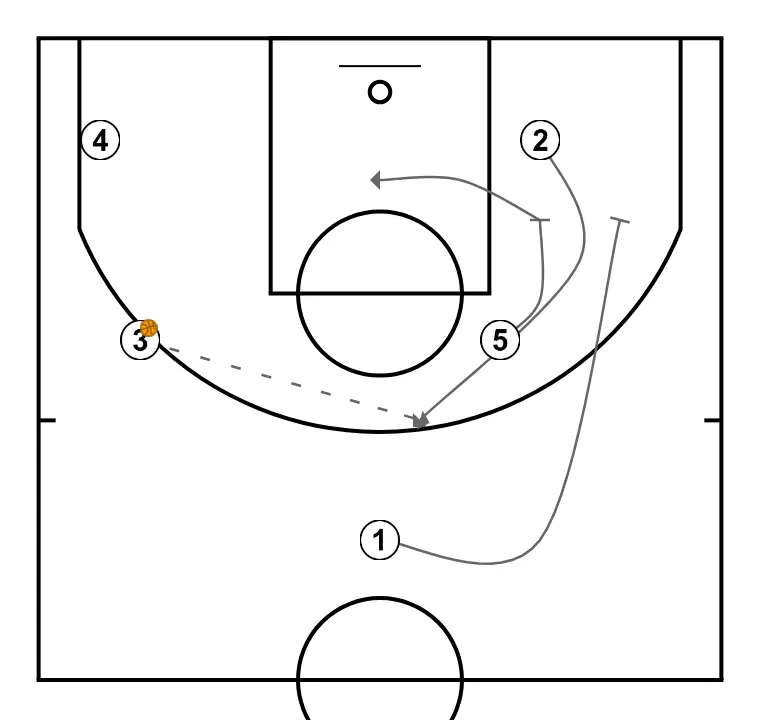
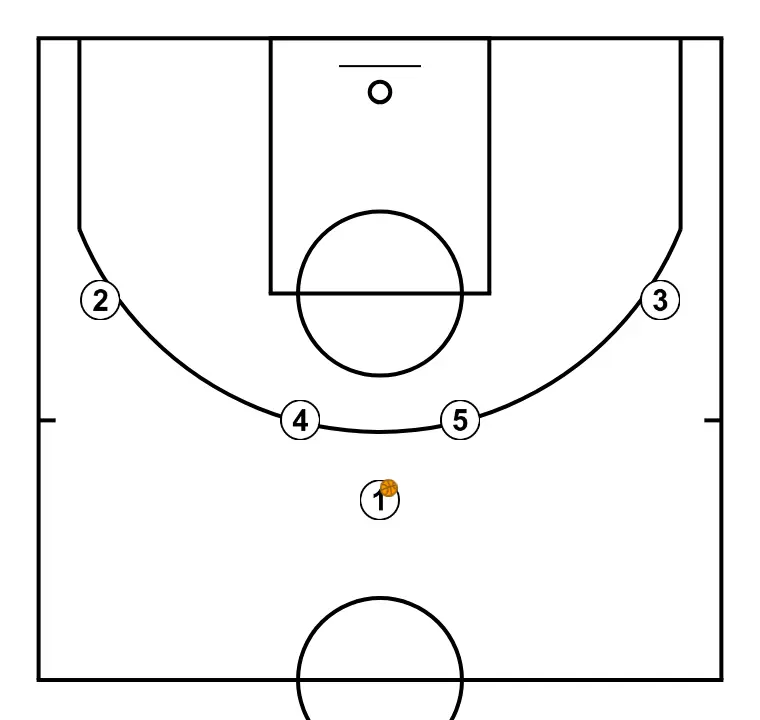
If 4 does not receive the ball, then 2 could cut to the top via elevator screens set by 1 and 5. Furthermore, 5 could slip the screen as well.
Next, 2 could receive the ball from 3 and take the three-point jump shot if open. Also, 5 could receive the ball from 3 and score near the basket.
STEP 3
If 4 does not receive the ball, then 2 could cut to the top via elevator screens set by 1 and 5. Furthermore, 5 could slip the screen as well.
Next, 2 could receive the ball from 3 and take the three-point jump shot if open. Also, 5 could receive the ball from 3 and score near the basket.